
Gram coin the new name for Toncoin
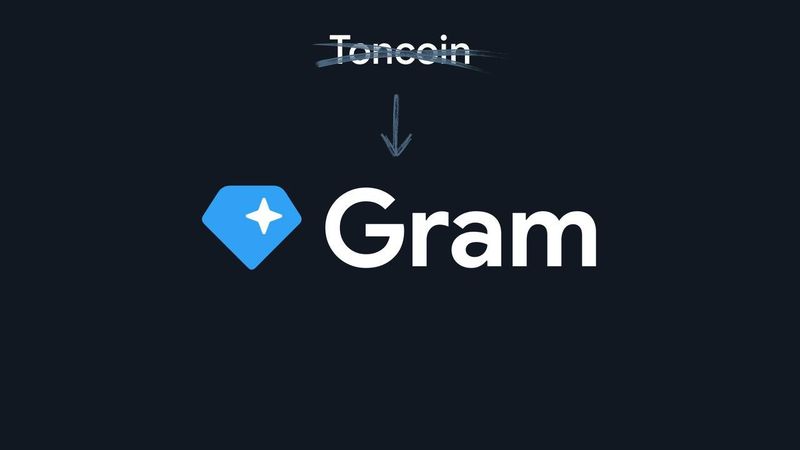
Pavel Durov announces Toncoin is becoming Gram again. Learn why this rebrand matters for freelancers, crypto payments, and Telegram's 1B users.
Pavel Durov just dropped news that's bigger than most people realize: Toncoin is officially becoming Gram again. This isn't some random rebrand—it's a deliberate return to the name Telegram's blockchain carried in its original 2018 whitepaper, before the SEC forced the project underground in 2020.
The announcement is step four in Durov's seven-part "Make TON Great Again" roadmap, and the market noticed. TON jumped roughly 10% immediately after the news broke. More importantly, the Gram name could sharpen recognition among Telegram's nearly 1 billion users as the app pushes deeper into payments and creator tools.
For freelancers and crypto-native founders, this matters because Telegram is where your clients already are. The rebrand signals that Durov is serious about turning TON into a near-feeless settlement layer—one that's native to the messaging app you're probably already using daily. If you've been invoicing international clients or dealing with slow cross-border payments, Gram's integration with Telegram could eliminate the friction between "send invoice" and "receive payment." No token swap required—just a name that finally matches the platform's ambitions.
Why Toncoin Was Renamed to Gram: A Step in the MTONGA Roadmap
The rebrand isn't random—it's step four of seven in Pavel Durov's "Make TON Great Again" (MTONGA) roadmap. This structured plan aims to transform TON into a near-feeless settlement layer integrated directly into Telegram's billion-user ecosystem. The name change requires no token swap. If you're holding TON, you're already holding Gram.
Here's the backstory: Gram was always the original name. When Pavel and Nikolai Durov launched the Telegram Open Network in 2018, their whitepaper called the native currency Gram. The project raised $1.7 billion in a private token sale—one of the largest ICOs ever. Then the SEC stepped in.
In 2020, U.S. regulators forced Telegram to abandon the project entirely, arguing the token sale violated securities laws. Telegram paid an $18.5 million fine and returned $1.2 billion to investors. Pavel Durov publicly announced Telegram was ending work on TON. The blockchain didn't die, though. An independent community picked it up, rebranded it as The Open Network, and renamed the token Toncoin to distance itself from the regulatory mess.
Fast forward to 2026. Durov's reclaiming the Gram name signals something bigger than nostalgia. It's a deliberate move to tighten the connection between Telegram and TON. With Telegram now pushing payments, creator tools, and upgrades to ton.org and TON Pay, the Gram name carries instant recognition for 1 billion users who never heard of "Toncoin."
The MTONGA roadmap is methodical. Step four restores identity. The remaining three steps—still unannounced—will likely focus on scaling, integration, and mass adoption. Durov's betting that Gram's return will make the blockchain feel less like a crypto experiment and more like a native feature of the app people already use daily.
The Open Network (TON) Blockchain: What Stays the Same?
Here's what's important to understand: the blockchain itself isn't changing. The Open Network remains The Open Network. Your wallet addresses work the same way. Smart contracts keep running. The infrastructure that processes transactions — the validators, the consensus mechanism, the entire technical foundation — stays exactly as it is.
What's changing is just the token name. Toncoin becomes Gram. That's it.
This matters because TON's core features are what make it valuable for payments and invoicing in the first place. The blockchain still processes transactions in under five seconds with fees that typically cost fractions of a cent. It's still the same network that Telegram integrated directly into its app, giving 1 billion users native access to crypto payments without leaving their messaging interface.
For freelancers and agencies, this means your existing TON-based invoicing workflows continue working exactly as before. If you're using LinkVoices to send crypto invoices, you'll see "Gram" instead of "Toncoin" in your currency options — but the underlying payment rails are identical. Your clients send Gram to the same wallet addresses. The settlement speed doesn't change. The transaction costs stay minimal.
The rebrand actually strengthens TON's positioning. Pavel Durov is restoring the original 2018 identity that was outlined in Telegram's first whitepaper — before SEC regulators forced the project to shut down. Bringing back the Gram name is step four of seven in Durov's "Make TON Great Again" roadmap, which aims to turn the network into a near-feeless settlement layer with tighter integration into Telegram's payment features and creator tools.
For agencies managing international payments, this continuity is crucial. You're not dealing with a token swap or migration. The same blockchain that already handles cross-border transactions instantly continues doing exactly that — just with its original name back.
Impact of the Gram Rebrand on Token Value and Market Sentiment
The market's immediate response to the Gram rebrand was unambiguous—TON rallied roughly 10% following Durov's announcement. That's not just noise. When a token jumps double digits on a name change alone, you're looking at pent-up sentiment finding an outlet.
Here's what actually happened: Durov framed the rebrand as a homecoming. Gram was the original name from the 2018 whitepaper—before the SEC forced Telegram to abandon the project in 2020. The community rebuilt the network and called it Toncoin, but that name never carried the weight of the original vision. Bringing back Gram signals something bigger than branding—it's Telegram reclaiming ownership of its blockchain narrative.
Investors responded because the rebrand comes with substance. This is step four of Durov's seven-part "Make TON Great Again" roadmap, and it's tied directly to Telegram's billion-user ecosystem. The timing matters. Telegram is pushing hard into payments and creator tools, and Gram sharpens recognition for users who might not know what "Toncoin" even means. If you're trying to turn a blockchain into a near-feeless settlement layer for a massive social platform, you need a name that sticks.
The long-term play here centers on adoption. Gram isn't just easier to remember—it carries historical legitimacy. For freelancers and builders dealing with cross-border payments, that matters. A token integrated into Telegram's payment infrastructure, backed by a name people recognize, has a clearer path to real-world use than yet another generic crypto label. The rebrand also sets up TON Pay and ton.org upgrades that could make crypto invoicing and settlements feel native to Telegram rather than bolted on.
Will this translate to sustained price growth? That depends on execution. But the 10% pop wasn't just speculation—it was the market betting that Durov's roadmap has teeth, and that Gram's return signals Telegram is serious about owning its crypto rails.
What Freelancers and Agencies Need to Know About Gram
If you're billing international clients, Gram's rebrand matters more than you think. The token that was forced underground in 2020 is back with its original name—and it's positioned to become the simplest way to move money across borders without touching a bank.
Cross-Border Payments Without the Friction
Here's the reality: traditional payment rails are broken for remote work. Wire transfers take 3-5 days. PayPal eats 5% plus currency conversion fees. Wise is better, but you're still dealing with banking infrastructure that wasn't built for a global workforce.
Gram changes this. It settles on TON's Layer 1 blockchain, which means near-instant transfers with minimal fees. You invoice a client in Berlin at 9am, they pay in Gram, and you've got funds in your wallet by 9:02am. No intermediary banks. No FX markups. No wondering if the payment will clear before rent is due.
The Telegram integration is the real unlock. With 1 billion users already on the platform, your clients don't need to download a separate wallet or learn complicated crypto UX. They're already there. TON Pay is being upgraded specifically to handle creator payments and business transactions—this isn't theoretical infrastructure, it's live and improving.
Practical Integration for Invoicing
You don't need to rebuild your entire payment stack. Start with one client who's crypto-curious. Create a Gram invoice using a platform like LinkVoices, which generates a payment link and tracks status automatically. Include your TON wallet address and a QR code—it takes 30 seconds.
For agencies managing multiple clients, the approach is similar but scaled. Set up a dedicated Gram wallet for business transactions. Use it alongside traditional methods for the first quarter. Track which clients pay faster and which prefer crypto. You'll likely find that Web3-native companies and international contractors adopt it immediately.
The name change from Toncoin to Gram isn't just branding—it's Telegram reclaiming its original vision from 2018. That vision included payments as a core feature, not an afterthought. Now it's finally happening, and freelancers who move early will have the infrastructure advantage when crypto invoicing becomes standard practice.
Gram Coin: A Homecoming for Telegram's Crypto Vision
The Gram rebrand isn't just cosmetic—it's Telegram reclaiming what the SEC forced them to abandon six years ago. When regulators killed the original Telegram Open Network in 2020, the community rebuilt it as TON and renamed the token Toncoin. Now Durov's bringing back the name from the 2018 whitepaper, and the market responded with a 10% pump.
This is step four of seven in Durov's "Make TON Great Again" roadmap. The goal? Turn TON into a near-feeless settlement layer for Telegram's billion users. No token swap needed—just a return to roots that sharpens recognition as Telegram leans harder into payments and creator tools.
For freelancers and agencies dealing with international clients, Gram's integration with Telegram creates something traditional payment rails can't match: instant, borderless payments inside an app your clients already use daily. The rebrand positions Gram as more than another crypto—it's infrastructure for how remote work actually happens.
If you're tired of wire fees eating your margins or waiting days for cross-border transfers, Gram deserves your attention. Platforms like LinkVoices already make crypto invoicing dead simple. The infrastructure's here. The question is whether you'll use it.