
Decentralized Government
Definition, Examples & Tools
Authority, resources, and decision-making distributed away from central bodies toward local governments and communities — shortening the accountability chain between institutions and the people they serve.
Free educational resource · Real-world examples · Tools for freelancers and founders
What Is Decentralized Government?
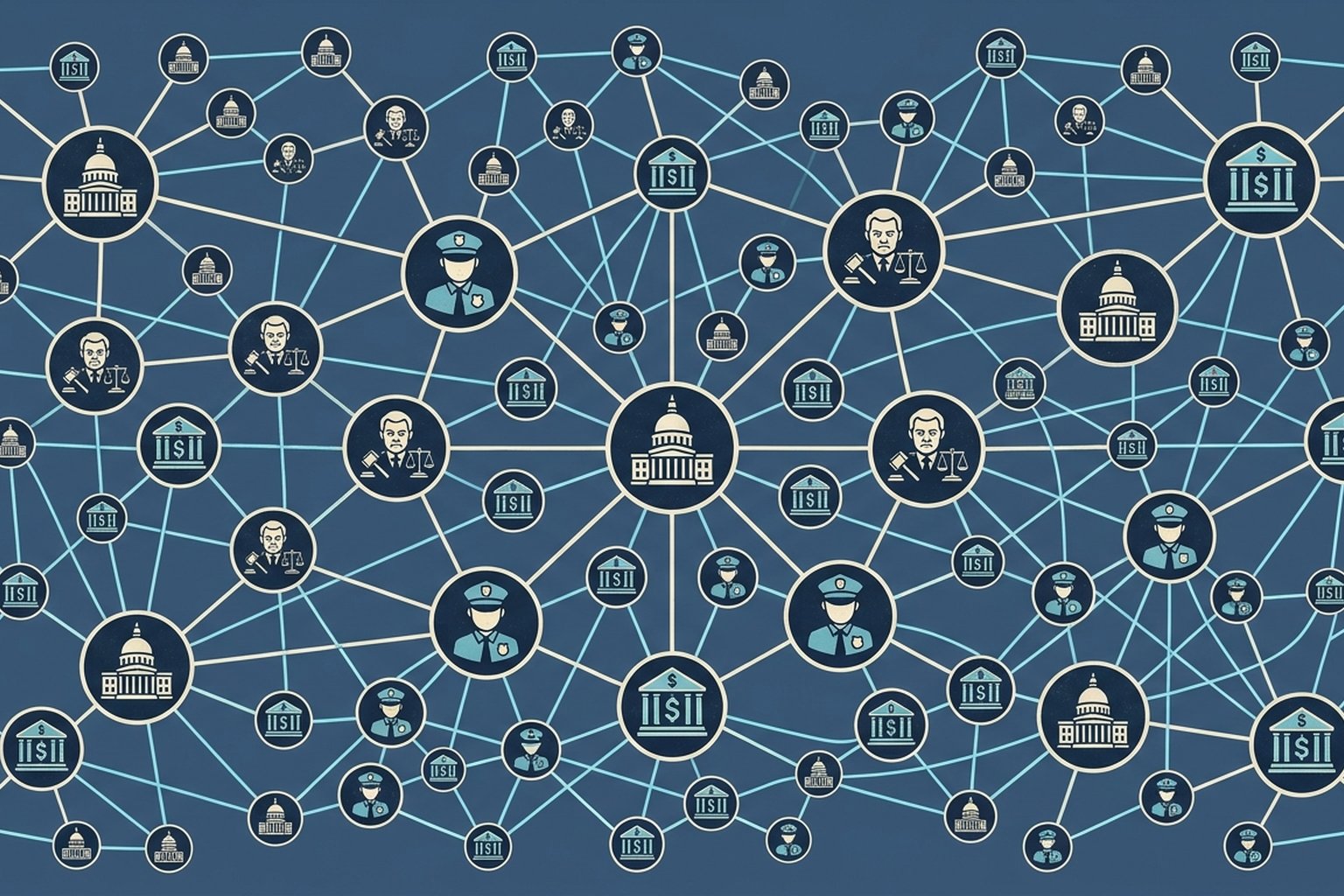
Decentralized government is the transfer of authority, responsibility, and resources over public functions from a central government to local governments or other local entities. Power doesn't sit in one place — it's distributed among many individuals and organizations, each with real decision-making weight.
In a centralized system, one body controls planning, resources, and decisions. In a decentralized system, those functions move closer to the people they affect. As the IMF has noted, this can shorten the "long route of accountability" between the public sector and its constituents — meaning faster, more responsive governance.
The concept isn't new. Pierre-Joseph Proudhon wrote about it in the mid-1800s, and Tocqueville observed that even the French Revolution carried early decentralizing impulses before reversing course. Today, decentralization shapes public administration, economics, and technology — including blockchain networks where no single entity controls the system.
The same logic that drives decentralized governance — no single point of control, distributed accountability — is the foundation of how decentralized financial systems work.
How Decentralized Governance Works
At its core, decentralized governance transfers authority, responsibility, and resources over public functions from central governments to local entities. The World Bank defines this as one of the most significant public sector reforms pursued globally.
The transfer isn't just administrative. It covers fiscal control, decision-making power, and service delivery responsibility. When democratic elections determine local leadership, the accountability chain between citizens and public institutions gets shorter.
That said, decentralization doesn't automatically produce better outcomes. Structure and coordination matter enormously — resource transfers must match the responsibilities handed down.
- ✓Local governments: Elected or appointed bodies that manage regional services, budgets, and policy implementation.
- ✓Field units: Central government offices operating at the local level with delegated authority.
- ✓Semi-autonomous organizations: Agencies that operate independently but remain accountable to a higher authority.
Centralized vs. Decentralized Governance
How the two models compare across the dimensions that matter most.
| Dimension | Centralized | Decentralized |
|---|---|---|
| Decision-making | Single central authority | Distributed to local/regional bodies |
| Accountability | Long chain to citizens | Shorter, more direct |
| Responsiveness | Slower, uniform policy | Faster, context-specific |
| Resource control | Held centrally | Transferred to sub-national entities |
| Risk | Concentrated failure | Distributed, but coordination gaps possible |
| Best suited for | National defense, monetary policy | Education, local infrastructure, healthcare |
Real-World Examples
Two of the clearest examples are Switzerland and the United States — both built around distributing power to smaller units, with track records that span centuries.
Switzerland
26 autonomous cantons
Each canton controls taxation, education, healthcare, and policing. The federal government handles defense and foreign policy. Cantons compete to attract residents and businesses, creating pressure to deliver quality public services.
United States
Federal + 50 state governments
States control education policy, criminal law, infrastructure spending, and dozens of other functions. A policy failure in one state doesn't collapse the whole system — enabling policy experimentation and local accountability.
Germany
16 federal states (Länder)
Regional economic development is managed at the state level, with clear intergovernmental coordination. The model demonstrates how resource transfers and responsibilities can be clearly defined across tiers of government.
Patterns Across Successful Systems
Local accountability
Decision-makers are closer to the people affected by their policies.
Policy experimentation
States and cantons can test approaches before national adoption.
Resilience
A failing policy in one region doesn't spread system-wide.
Tools Supporting Decentralized Governance
Blockchain is the infrastructure that makes decentralized governance practical. Smart contracts enforce rules automatically — no central authority required.
| Tool | Category | Use Case |
|---|---|---|
| Ethereum | Blockchain | Smart contract deployment, DAO infrastructure |
| Aragon | DAO Framework | Create and manage DAOs with voting and treasury tools |
| Colony | DAO Framework | On-chain task management and contributor compensation |
| Snapshot | Governance | Off-chain, gas-free voting for token holders |
| Gnosis Safe | Multi-sig Wallet | Shared treasury management for teams and DAOs |
| LinkVoices | Crypto Invoicing | Invoice creation, payment links, and status tracking for freelancers |
For freelancers and agencies operating across borders, decentralized payment systems eliminate the banking infrastructure requirement entirely. Platforms like LinkVoices extend this with structured crypto invoicing — line items, due dates, client info, and payment tracking without touching fiat rails.
Try LinkVoices FreeChallenges & Limitations
Decentralization doesn't guarantee better outcomes. When decision-making splits across multiple local entities, getting them to act in sync becomes a real problem — creating duplication, resource waste, and gaps in service delivery.
IMF research puts it directly: decentralization fosters stability and development only if transfers of resources and responsibilities are carefully coordinated and intergovernmental relationships are clearly defined.

Unclear authority
Define intergovernmental roles in law, not just policy.
Resource mismatch
Tie fiscal transfers to specific service mandates.
Coordination failures
Use shared digital infrastructure for data and reporting.
Accountability gaps
Require local governments to publish performance metrics.
Unclear authority
Define intergovernmental roles in law, not just policy.
Resource mismatch
Tie fiscal transfers to specific service mandates.
Coordination failures
Use shared digital infrastructure for data and reporting.
Accountability gaps
Require local governments to publish performance metrics.
Why Decentralized Governance Is the Future
Decentralization isn't a new idea — Proudhon argued for distributed power structures in the 1800s, and Tocqueville observed that local freedoms create the most effective counterweight against central authority. What's changed is the infrastructure to actually build it.
The shift is accelerating across crypto and Web3 (DAOs distributing decision-making), remote work (distributed teams proving coordination doesn't require proximity), and global collaboration (open-source projects and cross-border freelance networks functioning without centralized management).
If you're a freelancer or builder, you're already living in a decentralized system. The question isn't whether decentralization is coming — it's whether you're set up for it.
- →Crypto and Web3: DAOs distribute decision-making across token holders, removing the need for a central board.
- →Remote work: Distributed teams operate across time zones without a headquarters.
- →Global collaboration: Open-source projects and cross-border freelance networks function without centralized management.
Why It Matters
Centralized systems are built for people who stay in one place, work for one employer, and operate inside one regulatory framework. Decentralization removes the structural friction that slows down independent workers and crypto-native founders.
Flexible regulations
Local governments can set their own tax treatment, licensing requirements, and contractor classifications. Crypto-friendly jurisdictions like Portugal and the UAE moved independently without waiting for federal consensus.
Localized decision-making
Decentralization shortens the accountability chain between policymakers and the people they affect. A remote worker in Lisbon has more influence over local policy than over a national ministry.
Reduced bureaucratic barriers
Distributed governance cuts the layers between a founder and the permissions they need to operate. Fewer approval chains mean faster market entry.
Access to resources
Decentralized systems push funding and infrastructure decisions closer to the communities that use them — benefiting builders in non-capital cities and emerging markets.
The freelance economy is already decentralized by nature. The governance systems catching up to that reality are the ones worth paying attention to.
Decentralized Government FAQ
Get Paid in a Decentralized Economy
Decentralized governance and decentralized payments go hand in hand. Create crypto invoices with LinkVoices — no bank permission required, direct to your wallet.
Create Your Free InvoiceFree for individuals · No credit card required · Direct wallet payments